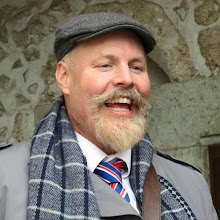
Eleven months ago I was meeting with parents and kids, describing my plans for my most ambitious LFMSS Europe tour yet – “Best of the West, Best of the East”. Now I’m sitting on a plane back to Canada and it’s all over. And I know tomorrow some of the kids in my grade 8 classes will be asking me when the meeting for Europe 2011 will be!
I’m always impressed with the support the parent chaperones give to the kids while we are travelling. They make sure the kids are safe, fed, accounted for, sleeping (or at least in bed), and, in the case of Mrs. Fairley and Mrs. Godler – medicated! The trip can’t happen without parent chaperones – so my thanks to Sherry, Mary, Dianna, Roberto, Ernie, Kevin, Gary, Shawna, Chris and Cheryll for joining us and doing a fantastic job. Not only were they efficient and helpful, but they were a lot of fun too! I also need to thank Ms. Vogt for helping organize and supervise the tour – she may not be Austrian, but she knows how to have a good time with the kids and she speaks German, French, and pretty decent (or barely passable?) Italian. I just need her to work on her Czech and Hungarian. I understand that Rens’ wife has been reading the blog, so I better thank him too! You guys who have gone on the trip before all have fond memories of Rens – he’s an outstanding driver, but much more than that, a kind and friendly man who I look forward to working with every year. He tells me that when he retires, the first place he will travel to is Canada. We’ll have to plan something for him here in Langley – he has a lot of fans!
I had remarked to Ms. Vogt several times in the months leading up to the trip that this is going to be a great group of kids to travel with. And they were. The students were interested and engaged (most of the time!), and they did our school proud again – many compliments on their behaviour from guides, hotel staff, restaurant staff, and various other people I met. I had some very deep conversations about history, science, philosophy, etc. with some of the kids – never underestimate the intellect of young people! In Venice, I noticed a lot of older people in different tour groups. In the Accademia museum of Venice (which is where I went instead of shopping for masks and glass) I had a great conversation with a woman who was in her 70’s. She was fascinated by the art, the history, and the culture, and was carrying a journal recording her insights and experiences on her tour. She had always wanted to travel, but circumstances were such that she had to wait until she retired. I think it’s great that she’s out exploring Venice for the first time – it shows me that you are never too old for new adventures. But I also thought how fortunate the kids are to be exposed to this kind of travel at such a young age. New horizons are opened – new possibilities exist, new ideas are formed – and they have a lifetime to act on those.
Craig Bresett


Back in Germany
Our last day touring Europe started early. Very early. We left the Luzern hostel at 6:00 AM, breakfast packets in hand, to make our appointment at Neuschwanstein. All of us (except Rens I hope) seemed to get some more sleep on the drive into Germany. The bus was so silent, Rens said “Craig, the whole family is asleep.” Because the bus is completely full this year, I mostly got to sit in the “jump seat” – the fold down chair that is beside the driver’s seat. I usually have two seats right behind Rens – one for me and one for all my books, binders, maps, documents, etc. But I pared down the amount of stuff that I took this year. Smart travellers always pack less – nobody comes back from a trip saying “next time I’m going to bring more stuff with me.”
Neuschwanstein is the castle of our childhood fairy tales. Ludwig II chose to surround himself with the epic stories of Richard Wagner’s operas – making this castle a tribute to the great German composer and his work. Ludwig only got to live here for a few months in the 1/3 of the castle that was completed at that time – as King of Bavaria he was emptying the state’s coffers with all of his elaborate building projects, and was declared unfit to rule by reason of insanity and taken away from his fairytale castle to a hospital where he and his psychiatrist were both found dead in the lake the next day.
During WW II, the Nazis looted much of the great art of Europe, and a large quantity of it was stored here in the unfinished rooms of the castle. A team of mostly American academics joined forces with the military in a team nicknamed “the Monuments Men”. Their mission was to recover the stolen art treasure of Europe and return them to their rightful owners (whether they be churches, museums, or individuals). There’s a great film about the whole Nazi obsession with stealing art and the post war recovery process – it’s called “The Rape of Europa”. Highly recommended, especially for those who have been on the trip, as it highlights many of the great art pieces that we visit, including the Bruges Madonna, the Mona Lisa, the Winged Victory, and the David. There’s also a book about it called “Rescuing DaVinci”.
After Neuschwanstein, our tour turned from the Romantic period of German history to the dark period of Nazism. Just outside of Munich is a mostly residential suburb called Dachau. The name of this town will forever be associated with the concentration camp established there in the weeks after Hitler took power in 1933. The camps original purpose was to house political dissidents (basically anyone who had vocally opposed Hitler’s rise to power). Dachau served as the model for the huge network of camps established and operated by the Nazis between 1933 – 1945, and also as the training ground for the violent SS – a place where they could learn cruelty and barbarism and use it to terrorize and murder “undesirable” people throughout the growing German empire. By the end of the war, more than 200 000 people had been imprisoned in Dachau, and ¼ of them perished here – worked to death, starved, or murdered outright. My wife’s uncle was a very young man when he was among the first group of American soldiers to liberate the camp. I’ve seen the grainy black and white pictures the military took – I can’t imagine what it would be like in person, in colour, experiencing this unspeakable devastation with all your senses. The students spent a long time in the museum before we toured through the roll call yard, the reconstructed barracks, the gas chamber and the crematorium. I would say this is not the ideal place to end a grand tour of Europe, but this is where if fit into the schedule. And it is essential that we understand what can happen when the basic values of freedom and tolerance are absent in a society, replaced by blind obedience and extreme nationalism.
Our last meal in Europe was at the Hofbrauhaus, a huge Bavarian beer hall (which caters to non-beer drinkers too with its huge buffet of Bavarian food (all sausages) and its all-star line-up of Bavarian entertainers.) It’s rowdy (in a controlled way) and fun, and a great way to end the last day in Europe – always a big hit with the kids and parents.
Neuschwanstein is the castle of our childhood fairy tales. Ludwig II chose to surround himself with the epic stories of Richard Wagner’s operas – making this castle a tribute to the great German composer and his work. Ludwig only got to live here for a few months in the 1/3 of the castle that was completed at that time – as King of Bavaria he was emptying the state’s coffers with all of his elaborate building projects, and was declared unfit to rule by reason of insanity and taken away from his fairytale castle to a hospital where he and his psychiatrist were both found dead in the lake the next day.
During WW II, the Nazis looted much of the great art of Europe, and a large quantity of it was stored here in the unfinished rooms of the castle. A team of mostly American academics joined forces with the military in a team nicknamed “the Monuments Men”. Their mission was to recover the stolen art treasure of Europe and return them to their rightful owners (whether they be churches, museums, or individuals). There’s a great film about the whole Nazi obsession with stealing art and the post war recovery process – it’s called “The Rape of Europa”. Highly recommended, especially for those who have been on the trip, as it highlights many of the great art pieces that we visit, including the Bruges Madonna, the Mona Lisa, the Winged Victory, and the David. There’s also a book about it called “Rescuing DaVinci”.
After Neuschwanstein, our tour turned from the Romantic period of German history to the dark period of Nazism. Just outside of Munich is a mostly residential suburb called Dachau. The name of this town will forever be associated with the concentration camp established there in the weeks after Hitler took power in 1933. The camps original purpose was to house political dissidents (basically anyone who had vocally opposed Hitler’s rise to power). Dachau served as the model for the huge network of camps established and operated by the Nazis between 1933 – 1945, and also as the training ground for the violent SS – a place where they could learn cruelty and barbarism and use it to terrorize and murder “undesirable” people throughout the growing German empire. By the end of the war, more than 200 000 people had been imprisoned in Dachau, and ¼ of them perished here – worked to death, starved, or murdered outright. My wife’s uncle was a very young man when he was among the first group of American soldiers to liberate the camp. I’ve seen the grainy black and white pictures the military took – I can’t imagine what it would be like in person, in colour, experiencing this unspeakable devastation with all your senses. The students spent a long time in the museum before we toured through the roll call yard, the reconstructed barracks, the gas chamber and the crematorium. I would say this is not the ideal place to end a grand tour of Europe, but this is where if fit into the schedule. And it is essential that we understand what can happen when the basic values of freedom and tolerance are absent in a society, replaced by blind obedience and extreme nationalism.
Our last meal in Europe was at the Hofbrauhaus, a huge Bavarian beer hall (which caters to non-beer drinkers too with its huge buffet of Bavarian food (all sausages) and its all-star line-up of Bavarian entertainers.) It’s rowdy (in a controlled way) and fun, and a great way to end the last day in Europe – always a big hit with the kids and parents.
Turning Point
The 17th century paintings on the 14th century Mill Bridge:
 The Reuss River, Luzern:

With the medieval water tower behind us in Luzern:
 Over the chapel bridge:
 The lion monument, dedicated to the Swiss Guard that were mobbed and killed in Paris during the French Revolution:

Out of Levanto this morning, I realized that the whole thing wraps up in two days... We’ve been so busy enjoying the good life in Italy I haven’t really been thinking about what day it is or when we go home. On our way out of Italy, we stopped in Milano to visit the massive cathedral (4th largest in Europe). I haven’t been before, but I had read that the visit to the rooftop is the highlight – however the stairs were closed! Not a lot of people complained about missing more stairs though. The inside of the cathedral was, well, the inside of a cathedral – lots of stained glass, painting, sculpture. I think the kids are cathedraled-out. I think I’m cathedraled-out! Well, maybe not. I did enjoy the statue of St. Bartholomew (whose martyrdom involved being skinned alive) – he is standing, holding his skin like a toga, with all his muscles/veins/ligaments exposed. It was done by a student of DaVinci – those Renaissance artists were very interested in anatomy, and studied cadavers (illegally) to perfect their art.
We had a beautiful sunny drive through the Swiss Alps in the afternoon, and lots of people tried (mostly in vain) to capture the scenery through the window of the moving bus. I used to do that too. Now I just sit back and enjoy it (if I’m awake). I love photography, but sometimes get tired of photographing something I’ve seen 6 times before. I don’t tire of visiting the same spots though – I always learn something new, notice something different, and mostly just enjoy seeing the kids’ (and parents’) reactions. Maybe next year I’ll just take pictures of everyone else taking pictures or gawking at whatever castle, church, or monument we are at.
In Luzern we had a kind of long, drawn out visit to the local swiss army knife shops, and then a short tour over the Chapel Bridge and around the Reuss River as the sun set. The highlight of Luzern was probably the entertainment at the youth hostel. The parents, led by Mrs. Fairley and Mrs. Fast, put together a series of skits lampooning themselves, the teachers, and of course the kids. It’s all on video – us embarrassing ourselves that is. Critics such as Morgan had this to say: “I laughed so hard I nearly peed my pants”. Good times. Good times.
Ascents, Descents, and Crazy Canadians
Deep in conversation after dessert at Moresco:
 The kids dress up for their fancy Italian dinner:


 At the highest elevation of the hike we find free drinking water coming out of a stump!
 We also find a big church in the middle of nowhere:
 Relaxing near the summit:
 Going up:
 One of the many trailside grottos for pilgrims to rest and pray in:
 On the beach in Monterosso after the first leg of the hike:
 Il Gigante:
At the summit of the first hike - the ruined monastary:

Part of an abandoned building near the monastary:
 Looking down at the Mediterranean:
 We made it to the top (of the first part):


 There are several houses that dot the high mountain trails - this one uses local materials for the roof - just pieces of slate gathered in the hills:
 Looking back at Levanto (where we started from):
 A medieval castle the Nazis used as a weapons store and bunker during WW II:
 Going up:
 One of the many interesting and creepy characters around the hostel in Levanto:
 We made it back:
Sunset over the beach in Levanto. Incredulous Italian kids are standing behind me.
 The well muscled, tough bunch of hikers who did the second leg of the hike, happy now to be on the beach in Vernazza:
 Vernazza:
 High on the hills:

 The German backpackers took this photo (which is why I am in it!)
 Relaxing at Soviore:
 "Do we have to keep going?"
 Shelby enjoying the beach in Monterosso:
 Photo wars:
 "The next trail goes up. Way up."
 Don't do it Mr. Becker:
 The best tasting lunch packets ever:
Making sure we are on the right path:
 One of the high points:


A break early on in the hike:
 "Yo, no photos!"


 One of the trail side homeowners works on his stone wall:
Jaqueline, proprietor of Ospitalia Del Mare (the hostel where we stayed in Levanto) informed me that we were lucky - my colleague from another school in Langley was here several days before us with a school group and it was SNOWING! They don't typically get snow here, but it has been an unusually cold winter in Europe this year (opposite of ours).
We, on the other had, awoke to blue skies and a perfect temperature for MASSIVE ascents on the Cinque Terre. This year we walked from Levanto to Monterosso, stopping at the ruined monastary on the high point overlooking the sea on the way. In Monterosso, some of the group decided to take the train back, but 21 of us kept on, hiking an even more gruelling climb to Soviore, the site of a chapel built in the 1300's to house a Pieta carved in the 600's! It was a nice surprise, as I didn't know what was up this trail since I had never taken it before. With the assistance of some German backpackers who were attempting to cook pasta on their portable stove, we contiuned along the path and down to Vernazza for unlimited gelato (the kids deserved it - the hike was hard). On the way down we met a local gentleman who informed us that the path we were on was an ancient Roman road, and that Julius Caesar himself had once travelled it. At this point, though, the kids were much more focussed on the gelato, and much less focussed on history. Which is OK. Sometimes.
A lot of the kids went swimming in the Mediterranean after getting back from the hike. When school in Levanto got out, some of the local kids were walking around near the beach and shaking their heads in disbelief at the crazy Canadian kids in the cold water.
On a side note, today is the day many of the kids got to try the Italian train station toilet. Which is simply a hole in the floor. With some ridges on either side so you don't fall in. Good balance everyone!